

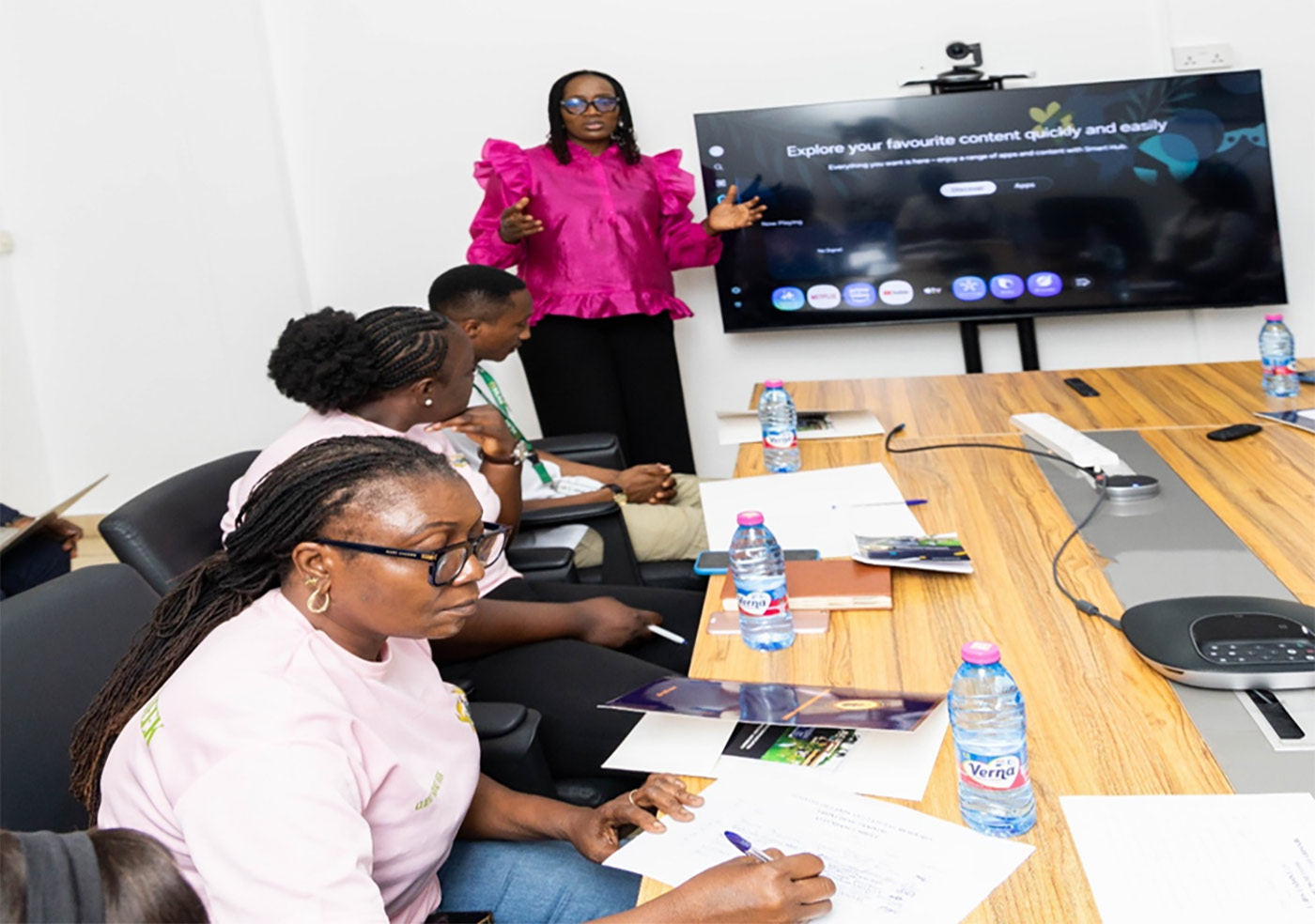
The GCTU Centre for Strategic Business and Professional Development (CSBPD) has trained staff of the Ministry of Lands and Natural Resources in customer service and front desk management on Thursday, October 29, 2026, at the Ministry’s premises in Accra.
The one-day training, which forms part of the Ministry’s Client Service Week celebrations, was designed to equip staff with the essential skills required for effective front desk management and to deepen their understanding of the Ministry’s core values in serving the public and investors.
The training covered customer enquiry management, front office operations and the use of technology to improve service delivery and operational efficiency, with emphasis on professionalism and quality service in the operations of the Ministry.
Addressing the participants, the Director of CSBPD, Dr. Vera Graham Asante said the training aims to equip staff with knowledge and practical skills to meet evolving workplace demands through continuous learning.
She noted that customer service has shifted from traditional service to interactive customer engagement, driven by the need for organizations to build stronger client relationships, trust, satisfaction and corporate reputation.
This informed GCTU’s decision to design the programme to address technical and interpersonal competencies, including effective communication, time management, technology use and problem-solving, which are essential for efficient and professional service delivery.
The Deputy Registrar of the Directorate of Research, Innovation and Consulting, Dr. Kwame Owusu Afram, who facilitated the training, said the training focused on defining efficiency and effectiveness in customer service delivery.
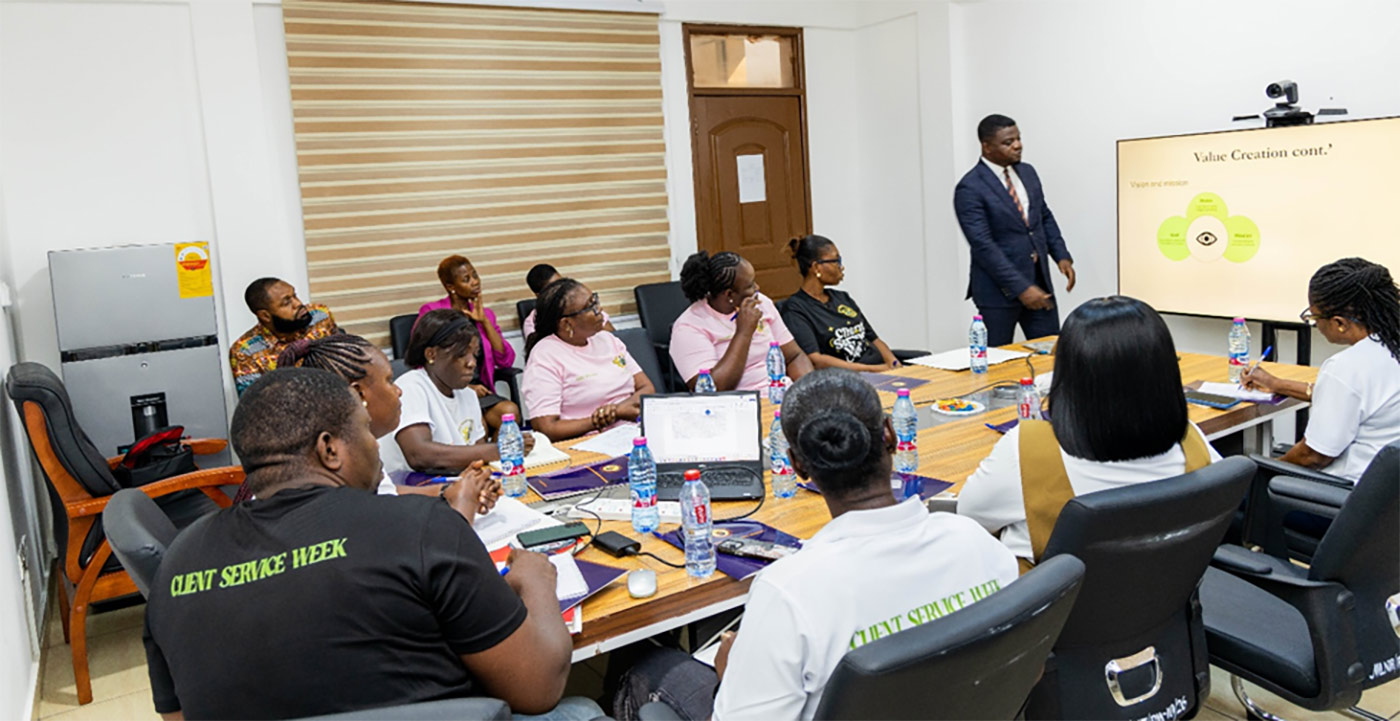
He noted that customer service was one of the key values underpinning the Ministry’s operations and a critical factor in achieving its strategic objectives.
He explained that customer service personnel played an important role as frontline representatives of the Ministry, shaping clients’ first impressions of the institution.
Dr. Owusu Afram further observed that clients often assessed an institution’s credibility through the conduct, communication, appearance and professionalism of its staff, and therefore urged participants to uphold standards that positively reflected the Ministry’s image.

As key sources of information, according to him, elements like accuracy and positive relationships with clients and potential investors should be prioritized. “Good customer service is essential to building confidence in the Ministry’s relationship with the public,” Dr. Afram said.
Participants of the training included front desk personnel, executive secretaries and other staff whose roles involve direct interaction with clients.